

Introduction
“Anti-inflammatory eating” sounds complicated. For a lot of women, it turns into:
- Too many rules
- Too many foods to avoid
- Too much confusion
And instead of helping, it becomes one more thing that feels hard to stick with.
The truth is—it doesn’t have to be that way.
A simple, consistent approach is what actually makes the biggest difference.
What an Anti-Inflammatory Diet Really Means
At its core, anti-inflammatory eating isn’t about restriction—it’s about support.
It focuses on:
- Whole, minimally processed foods
- Balanced meals
- Stable blood sugar
This is important because inflammation isn’t just about what you eat—it’s also influenced by stress, sleep, and how consistently you’re fueling your body. I talk about how stress and cortisol can also impact inflammation in the first blog of this series, which is why food alone isn’t the full picture.
That’s why a simple, structured approach works better than a strict one.
How Inflammation Can Affect Cravings
- Your blood sugar isn’t stable
- Ultra-processed foods for convenience
- Not enough protein intake for the day
- dealing with stress which can lead to high cortisol levels
- Not getting enough fiber
Anti-Inflammatory Foods That May Help Reduce Cravings
- berries
- salmon
- chia seeds
- flaxseeds
- leafy greens
- Greek Yogurt
- nuts
- avocado
- legumes
Signs Your Body May Be Dealing with Inflammation
Many women don’t realize what inflammation actually looks like day to day.
It can show up as:
- Low energy
- Brain fog
- Increased cravings
- Weight gain (especially stubborn weight)
- Digestive issues
These symptoms are often brushed off—but they’re signals that your body may need more support. This is also why many women struggle with sugar cravings, especially at night.
Where Most People Go Wrong
This is where things usually fall apart.
Most people try to:
- Cut out everything at once
- Follow long “avoid” lists
- Be overly strict
That approach might work short term—but it’s not sustainable.
And when it becomes too overwhelming, it leads to:
starting over
inconsistency
frustration
Sound familiar? This is exactly what we talk about in my previous blog about why you keep starting over with your diet?
A Simple Way to Start
Instead of overhauling everything, focus on a few key habits.
This is where most of my clients see the biggest shift.
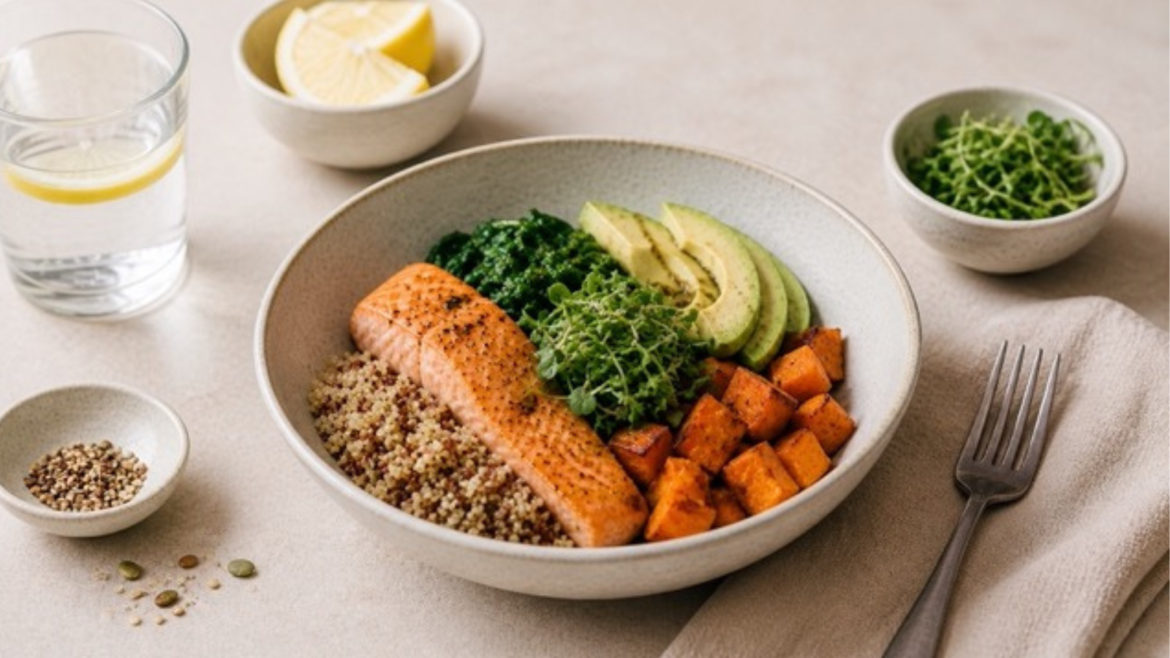
Build Your Plate
Start with a simple structure:
- Protein (chicken, fish, eggs, yogurt)
- Vegetables or fruit
- Healthy fats
- Fiber-rich carbs
This helps:
- Stabilize blood sugar
- Reduce cravings
- Support energy levels
It also makes eating feel more consistent and less chaotic.
Reduce Ultra-Processed Foods Gradually
You don’t need to eliminate everything overnight.
Start by improving:
- One meal
- One snack
- One habit
Small changes done consistently are far more effective than drastic changes that don’t last.
Focus on Consistency
This matters more than perfection.
If you’re eating well most of the time, your body responds.
If you’re constantly starting over, it doesn’t get the chance to.
Keep It Practical
If it’s too complicated—you won’t stick with it.
Simple meals, repeatable options, and easy routines are what make this sustainable.
What This Looks Like in Real Life
This isn’t about eating perfectly.
It looks like:
- Having go-to meals
- Not overthinking every decision
- Making better choices most of the time
And over time:
- Energy improves
- Cravings decrease
- Your body starts to respond
You may enjoy my book Emotional Eating Reset on Amazon which is structure-based one step at a time.
Final Thoughts
Anti-inflammatory eating isn’t about being perfect. It’s about giving your body what it needs—consistently.
And when you take that approach, it becomes much easier to maintain.
If you want a simple, structured plan that actually fits your life …….
You can learn more about working with me here.